A reference sheet for engineers specifying a stainless steel casting. Everything here is public standard data — use it to check your drawing before you send it.
This is where most drawing queries start. A casting cannot be made in a wrought bar grade — the equivalent cast grade has its own designation and slightly different chemistry, because the alloy has to behave in a mould rather than in a rolling mill.
| Cast grade (ASTM A351) | Wrought equivalent (AISI) | DIN / EN | JIS | Typical use |
|---|---|---|---|---|
| CF8 | AISI 304 | 1.4308 / GX5CrNi19-10 | SCS13 | General corrosion resistance, sanitary and food contact parts |
| CF8M | AISI 316 | 1.4408 / GX5CrNiMo19-11-2 | SCS14 | Chloride and acid resistance, valve and pump parts, marine |
| CF3M | AISI 316L | 1.4409 / GX2CrNiMo19-11-2 | SCS16A | Low-carbon version, for welded assemblies |
| CA15 | AISI 410 | 1.4008 / GX12Cr12 | SCS1 | Higher strength structural castings |
If your drawing quotes a wrought grade such as 316L, tell us in the RFQ — we confirm the cast equivalent with you in writing before quoting, rather than substituting silently.
Investment casting is a near-net-shape process, not a finishing process. The practical way to read a drawing is to split it into features that can come straight off the shell and features that need a cutter afterwards.
| General as-cast tolerance | Follows the general investment casting classes in ISO 8062 (CT grades). The class that applies depends on the dimension and on whether it crosses the parting line. |
|---|---|
| Across the parting line | Always looser than within one half of the tool. If a dimension is critical, ask us to orient it inside one half at the tooling review stage — that decision is free before the die is cut and expensive afterwards. |
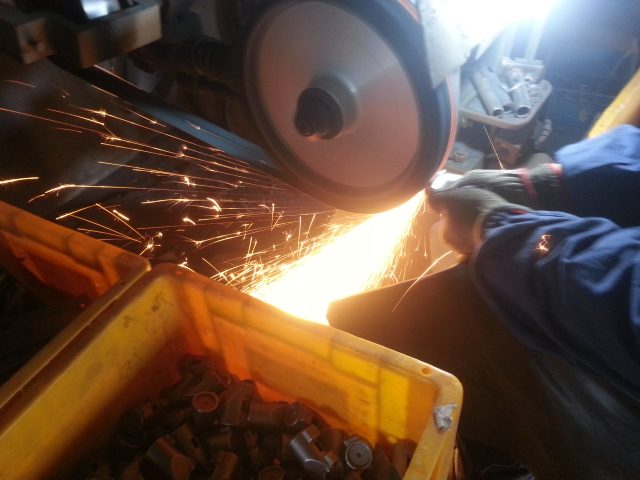
| Machined features | Held to the drawing on our own CNC lines. Threads are checked with go / no-go gauges; sealing faces and locating faces are machined rather than cast. |
| Machining stock | Agreed per feature during drawing review. Too little and a low spot appears after cutting; too much and you pay for metal and cycle time you do not need. |
These are process characteristics, not a promise about your part. The quotation states the tolerance we commit to for each critical feature you mark.
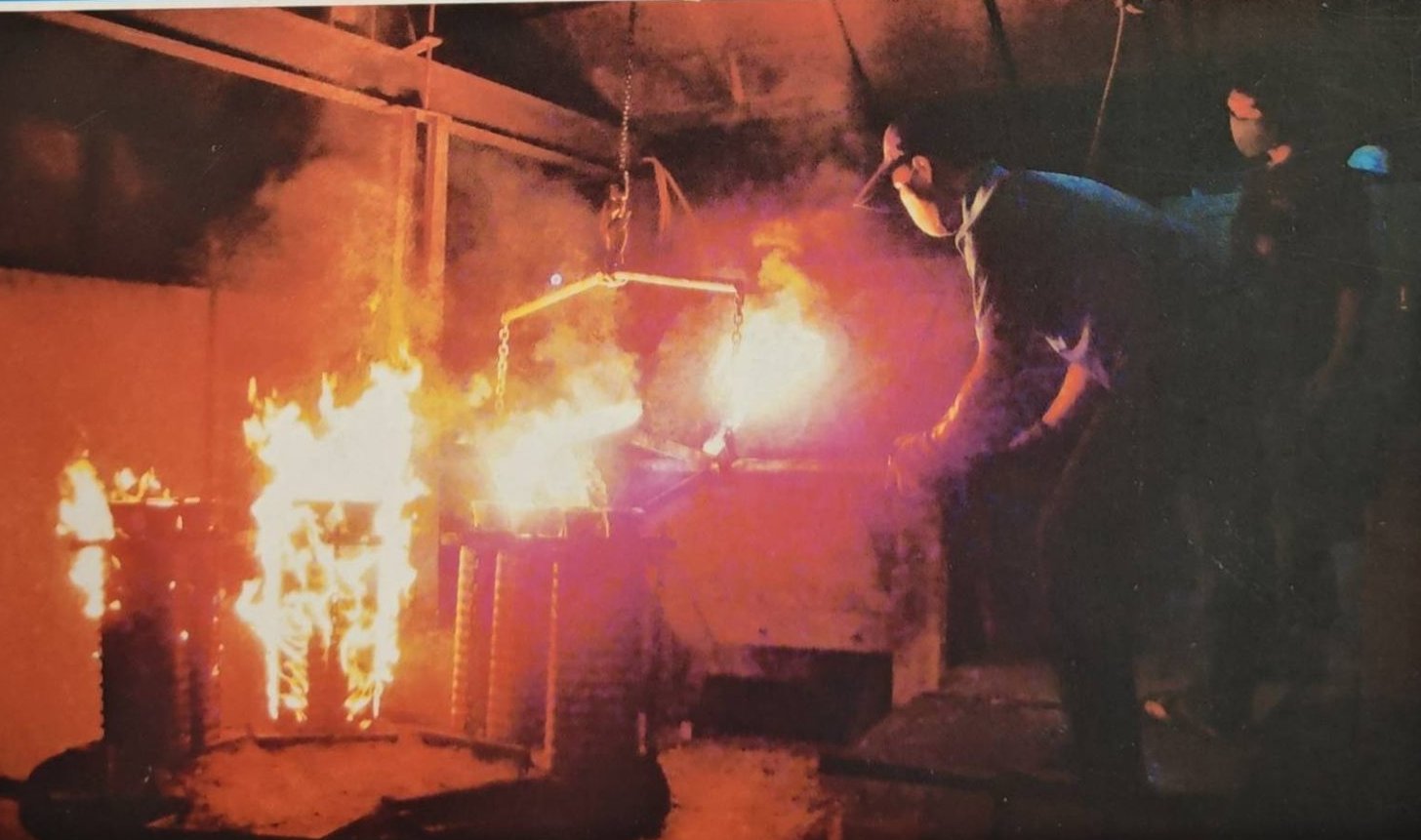
The working tool our melt shop uses on the furnace platform: enter the spectrometer reading and the bath weight, and it returns the alloy addition needed to bring the heat into spec. It is open for you to use — and it is a fair picture of how we run a melt.
Tell us which surfaces are visible on the finished product. That single line on a drawing changes both the process route and the price.
Send a 2D drawing or 3D model with material, quantity and market. You get a manufacturability review and a price.
Start an RFQ